

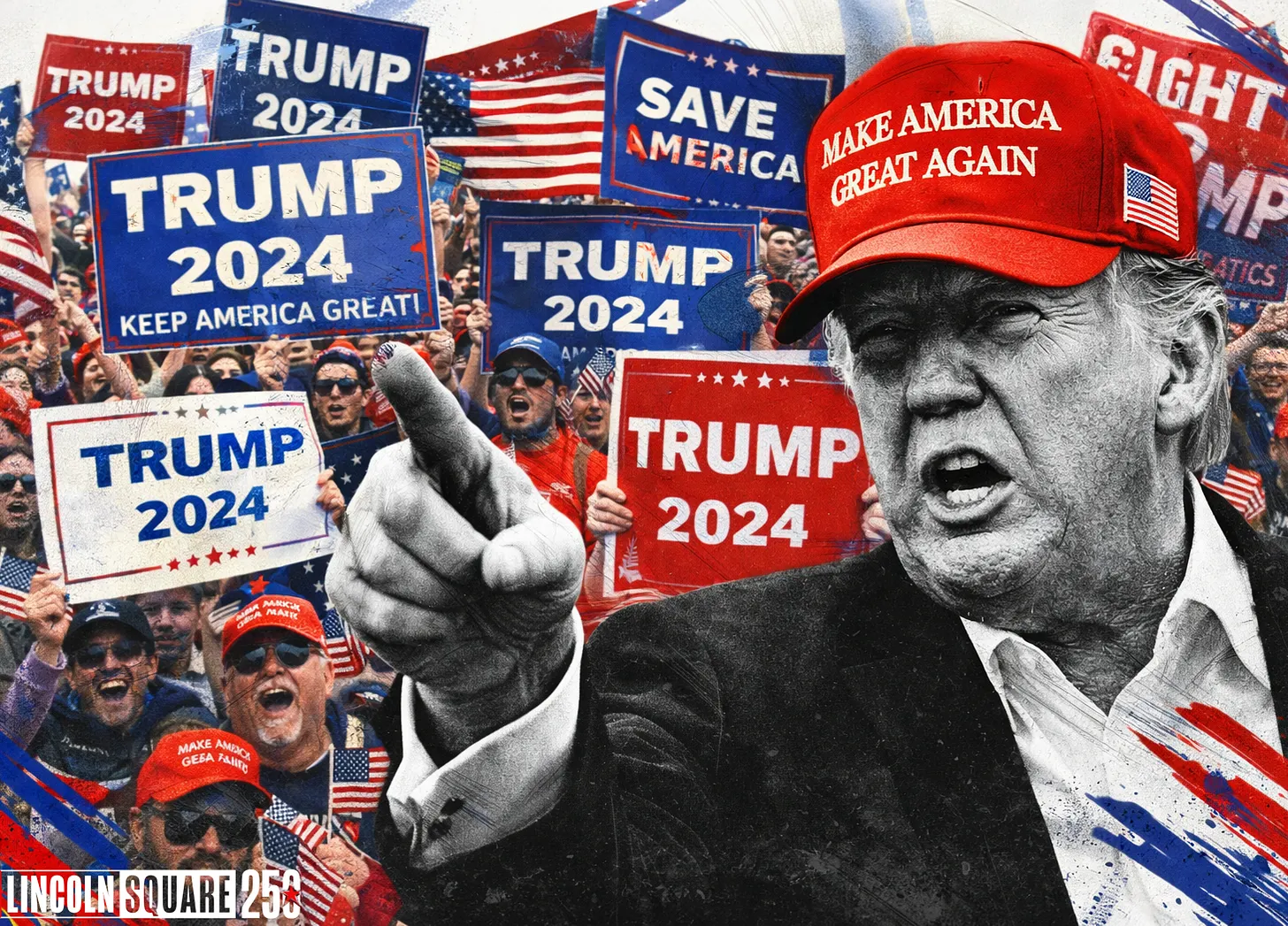
Written by Kristoffer Ealy
Since Donald Trump began doing dirty business alongside his father in the late 1970s, most Americans had the luxury of treating him the way you treat a jackass yelling into a Bluetooth headset at the airport: irritating if he happened to be near you, but otherwise somebody else’s problem. His deals could be shady, his ethics could bend like warm plastic, and none of it necessarily had to occupy much real estate in our heads. He was rich, loud, geographically distant, and—most importantly—politically irrelevant.
By the 1980s, though, Trump was becoming a national character. This was the era of Wall Street excess, conspicuous consumption, hostile takeovers, cocaine optimism, and enough shoulder pads to interfere with commercial aviation. Trump fit the moment almost too perfectly. He appeared on television, gave interviews, and popped up in films like Ghosts Can’t Do It, playing the role he had already spent years perfecting: Donald Trump.
But an eight-year-old kid like me growing up in South Central Los Angeles had no particular reason to give a damn about him. Trump could be as crooked, vain, tacky, or morally repellent as he wanted somewhere across the country, behind a velvet rope guarded by somebody named Chip. He was New York’s problem. I had cartoons to watch.
Want to read more? Please click… HERE!!!